Thinking Machines Lab on November 20, 2026 released Inkling 2 Mini, an open-weights model the company says is small enough to run on a laptop yet strong enough for agentic coding work. The weights are on Hugging Face under the Apache 2.0 license, and the model is also available for inference and fine-tuning on the lab's Tinker platform.
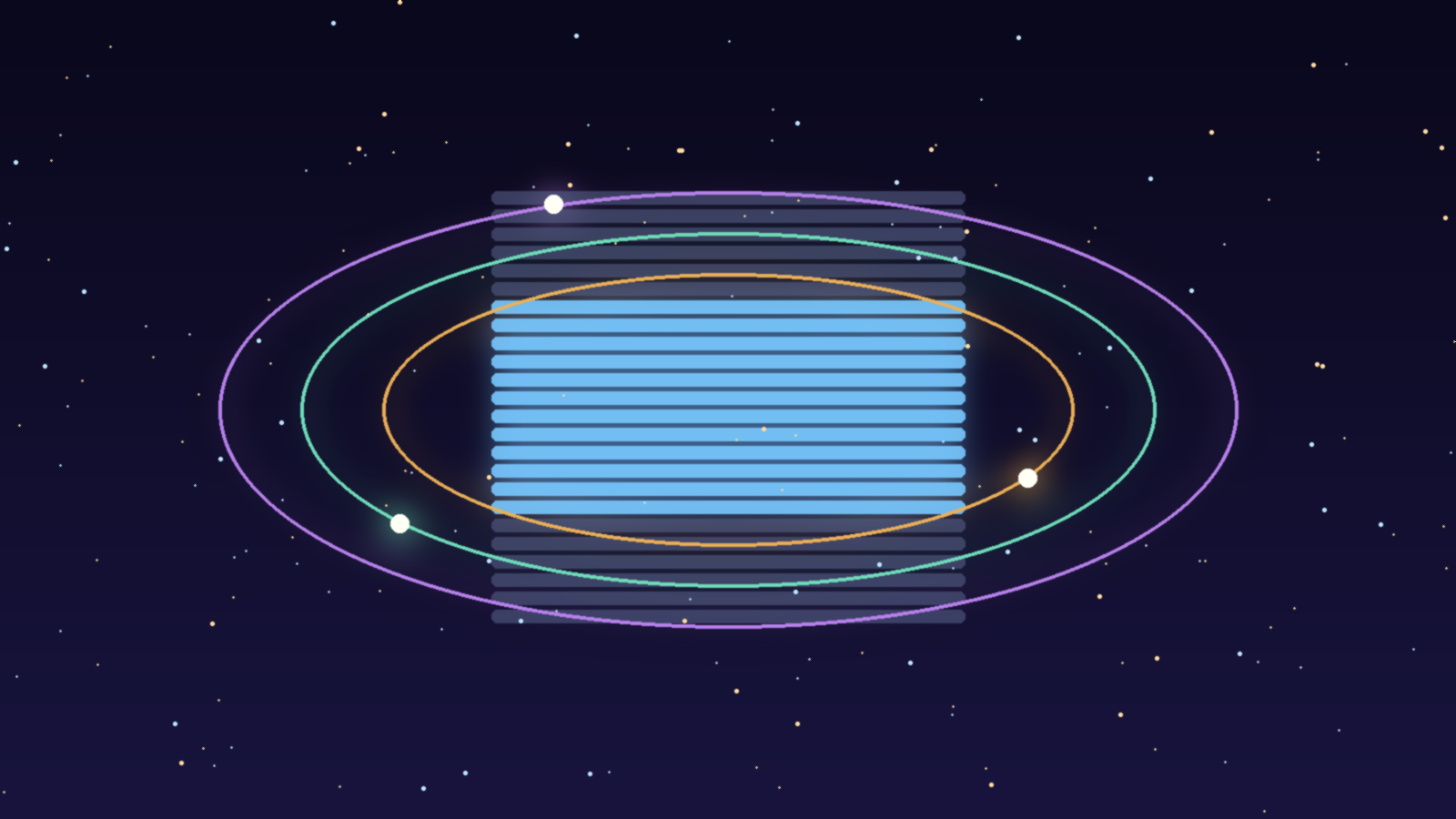
The headline idea is looping. Inkling 2 Mini has 24 transformer layers, but its middle 12 layers run three times for every token, so the model performs 48 layer passes while storing only 24 layers of weights. Thinking Machines argues this lets the model do more reasoning internally and reach answers with fewer generated tokens. It is a mixture-of-experts design with 26.4 billion total parameters and 3.4 billion active per token; counting the repeated passes, the company puts effective activations at about 5.4 billion per token.
According to the model card, each token is routed to 8 of 128 experts per layer, attention mixes local and global layers, and a vision encoder lets the model accept images alongside text. The context window reaches 1 million tokens. Most weights were trained and ship natively in NVFP4, with the final four layers in MXFP8, for a single checkpoint of roughly 20GB. Thinking Machines lists Apple silicon machines with at least 32GB of memory and Nvidia's DGX Spark as supported local hardware.
On performance, the lab says Inkling 2 Mini leads every open-weights model under 100 billion total parameters on DeepSWE v1.1, at 48.2%, and on Vals Index v2.2, at 46.5%. Those are company-reported figures. Independent benchmarker Artificial Analysis, as reported by The Decoder, scored the model at 20 on its Intelligence Index, tying Qwen3.8 27B while using far fewer active parameters.
Thinking Machines is also upfront about weaknesses. Looping does not help the model store more facts, so its factual-recall scores track other models of its size, and the model card warns it is more likely than larger models to state incorrect information with confidence. The company says it trails Qwen3.8-27B on multi-turn chat and heavily constrained instructions, and lags larger models on reasoning-intensive tests such as HLE-Diamond.
Safety research is a notable part of the release. Because a looped model can do more thinking without writing it down, it could become harder to oversee by reading its chain of thought. Alongside the main model, Thinking Machines published a variable-loop research checkpoint and reported that, as loops increased, the model's chain of thought got shorter but stayed legible, and it did not trend higher on agentic sabotage tests. Murati wrote that the model's reasoning remains monitorable at this scale but that this may not hold for larger models.
Ecosystem support arrived on day one. Hugging Face published a launch post with Transformers, llama.cpp and MLX support, the vLLM project announced day-zero serving support, and the lab lists SGLang, Ollama, Unsloth, NVIDIA Dynamo and others for local and production inference.