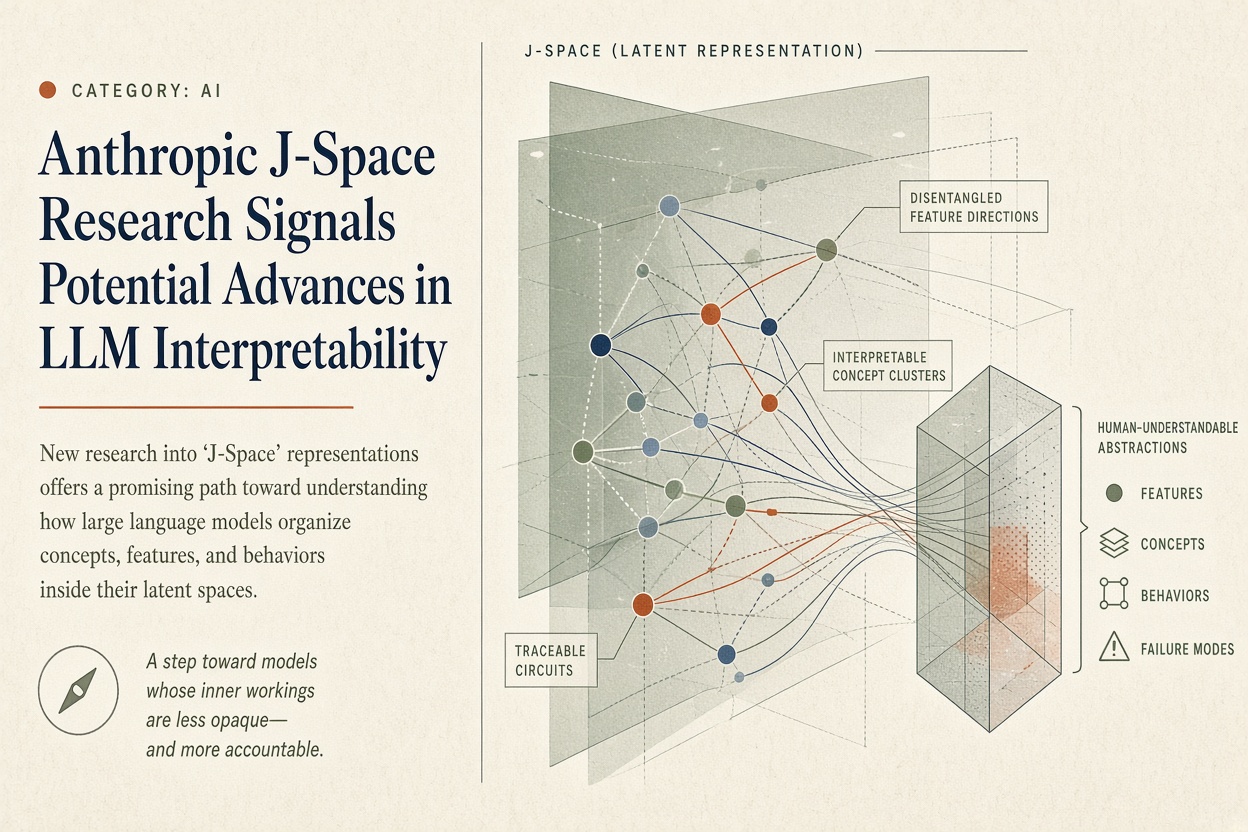
A recent analysis from IBM discusses Anthropic's J-space research as a method for examining how large language models process information internally [1]. The work aims to map patterns that reveal when models reach reliable conclusions versus uncertain ones.
According to the report, this line of inquiry could improve training techniques by identifying the conditions under which models produce trustworthy outputs [1]. Such insights might allow developers to adjust architectures or data pipelines more precisely.
The coverage notes that the findings are preliminary and draws from a single published source, requiring additional corroboration before broader conclusions can be drawn [1]. No other independent studies are referenced in the available material.
If validated, J-space techniques could influence how organizations evaluate AI systems for high-stakes uses by providing clearer signals of model confidence. This aligns with ongoing industry efforts to increase transparency in generative AI.
Overall the IBM account frames the research as an early step toward more interpretable AI rather than a completed breakthrough, emphasizing the need for continued scrutiny and multi-source confirmation [1].