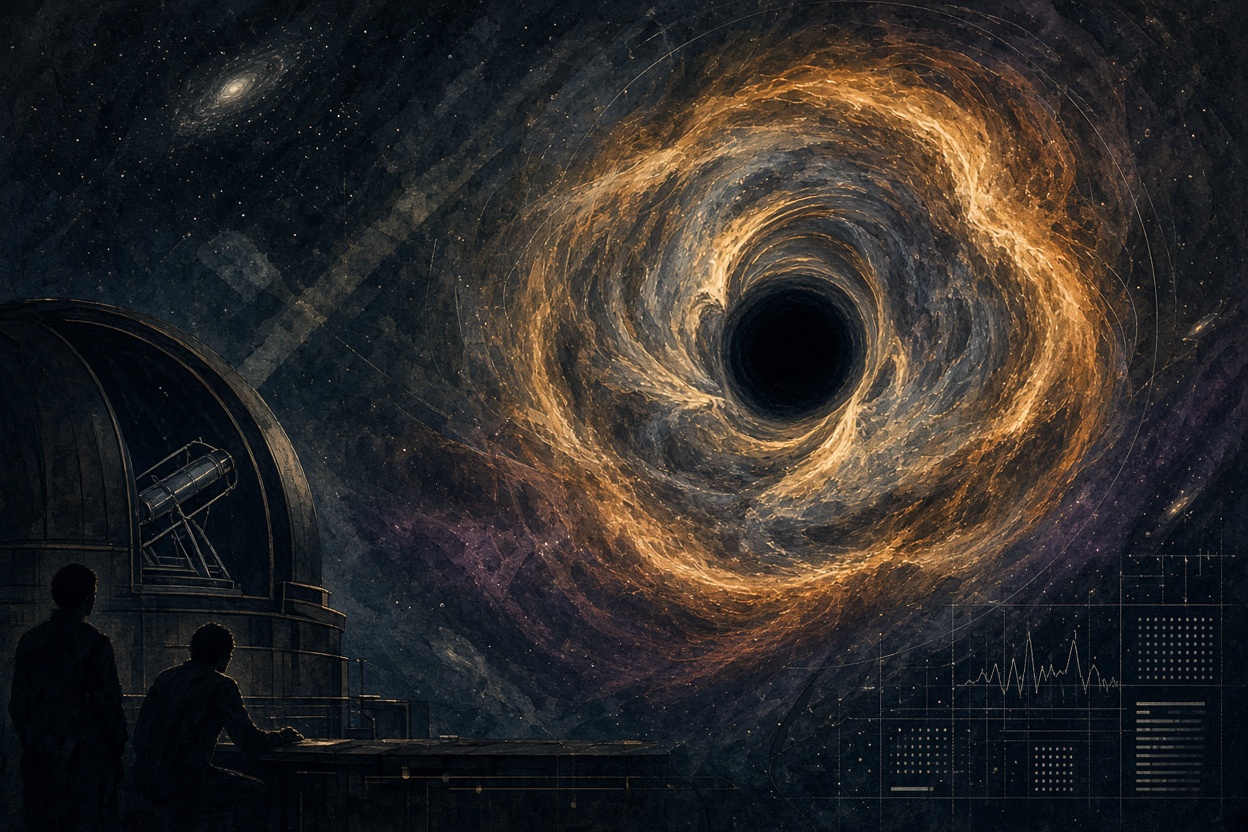
Researchers using the James Webb Space Telescope have reported identifying what they describe as a new type of astrophysical object, termed a black hole star, based on observations of distant cosmic phenomena [1].
Dr. Rohan Naidu of MIT's Kavli Institute stated that the object shines with energy typically linked to black holes while also displaying features classically associated with stars [1].
The team had been targeting early galaxies, including one formed roughly 280 million years after the big bang, before shifting focus to other objects that yielded this candidate detection [1].
This report originates from a single source and has been flagged as requiring additional independent corroboration before it can be considered settled science.
Supermassive black holes are understood to reside at the centers of most galaxies and are thought to influence star formation and galactic evolution, providing broader context for such observations [1].