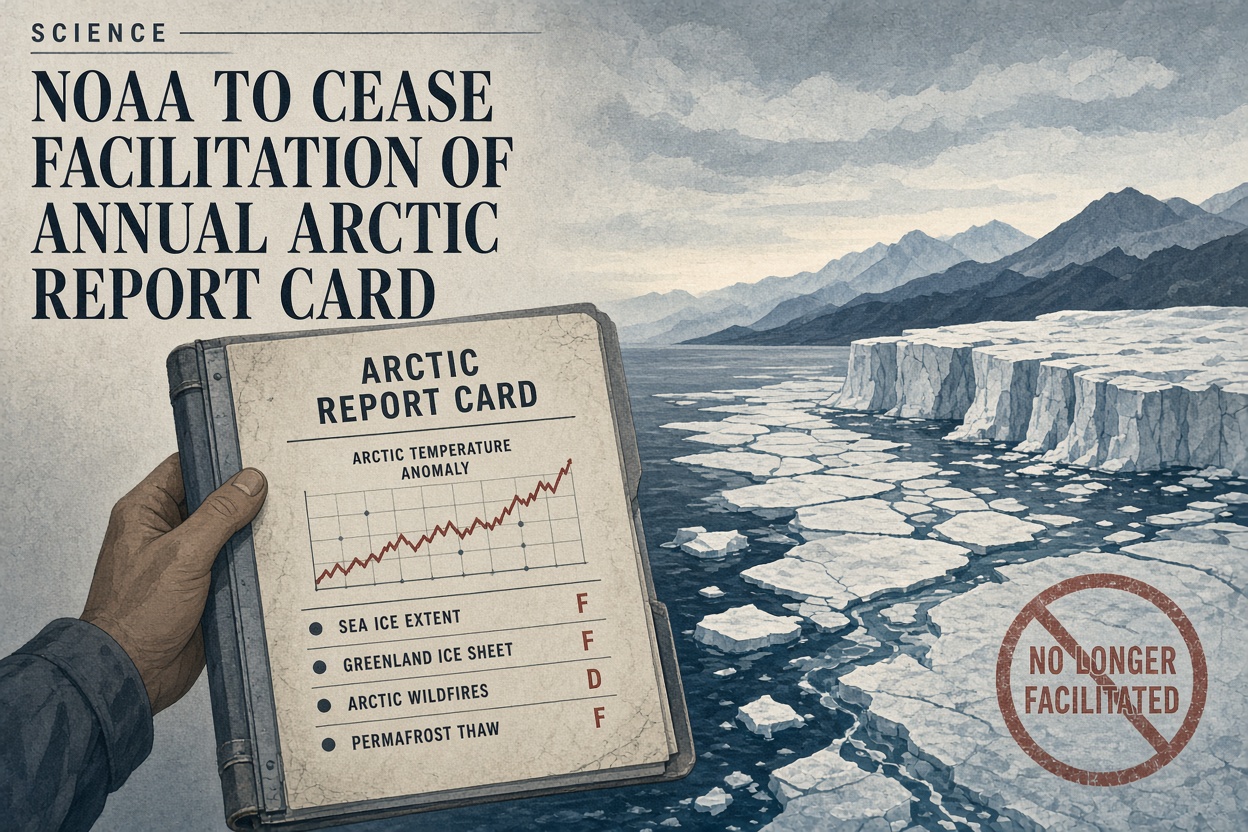
The National Oceanic and Atmospheric Administration will no longer facilitate the annual Arctic Report Card, a publication that has highlighted climate-driven changes in the region, according to a single news report [1]. The claim remains flagged for lack of independent corroboration and should be treated as developing.
The Arctic Report Card has traditionally been released around the American Geophysical Union conference and has covered topics such as melting sea ice, permafrost thaw, and effects on global sea levels. Prior editions drew on observations of how northern changes influence broader climate patterns.
Authors of the report were reportedly informed of the change, which could affect public release of future updates. A NOAA spokesperson stated the agency would stop facilitating the report but would continue collecting and publishing the historical data used in it [1].
This account originates from one outlet with limited source diversity, and no additional confirming reports have surfaced. Readers should note the absence of cross-verification before drawing conclusions about agency priorities.
The report has previously documented the Arctic shifting from a carbon sink to a net contributor in some analyses due to permafrost dynamics. Any future continuation would depend on other organizations stepping in to compile and disseminate findings.