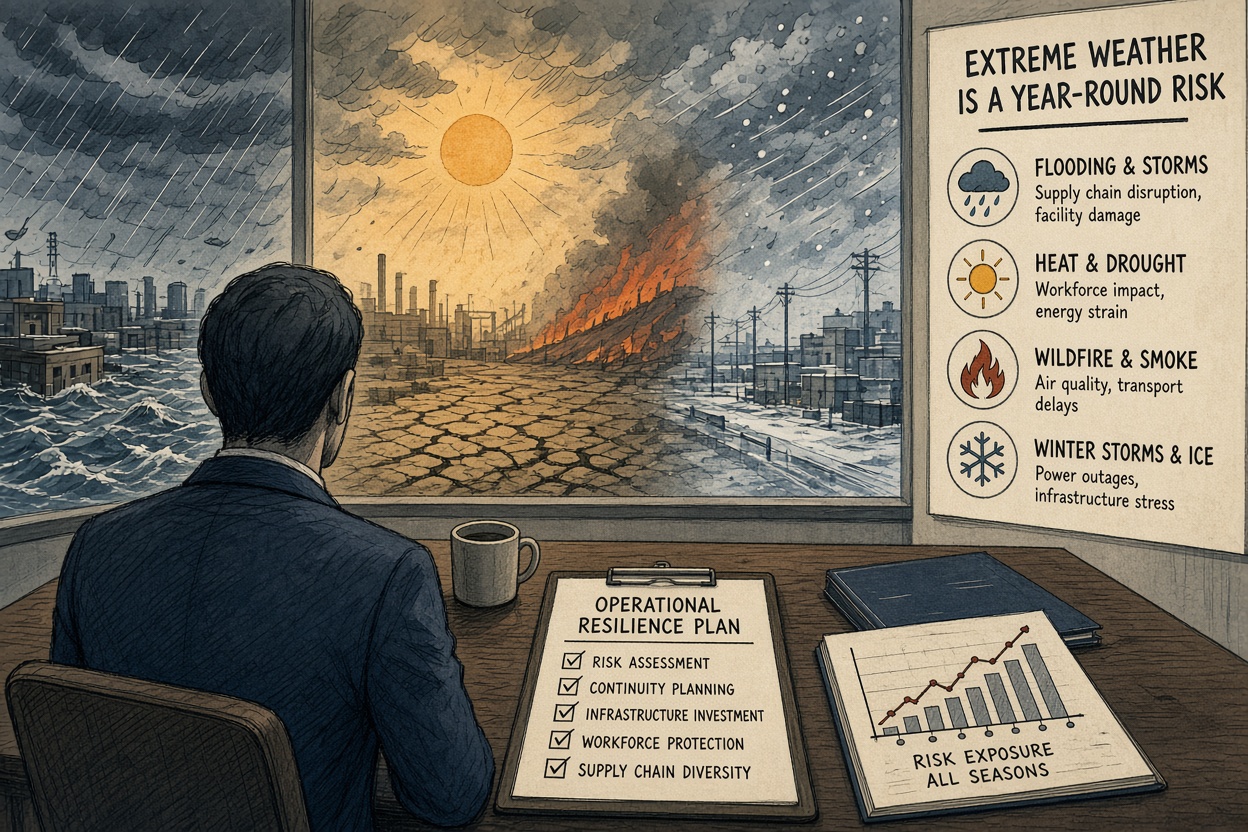
Extreme weather events pose risks that extend far beyond direct property damage, affecting supply chains, transportation, and workforce availability across wide regions.
According to a single source interview, many companies make the error of viewing weather threats as short-term events rather than continuous business continuity challenges [1].
Winter Storm Uri in 2021 is cited as an example where power outages and supplier disruptions caused more operational halts than structural harm to buildings [1].
Hurricane Ian's insured losses of $50 billion to $65 billion in 2022 reportedly included significant impacts through distribution networks hundreds of miles from the landfall site [1].
The reporting emphasizes preemptive steps such as mapping critical suppliers and testing contingency plans, though the account relies on one expert perspective and lacks independent corroboration.