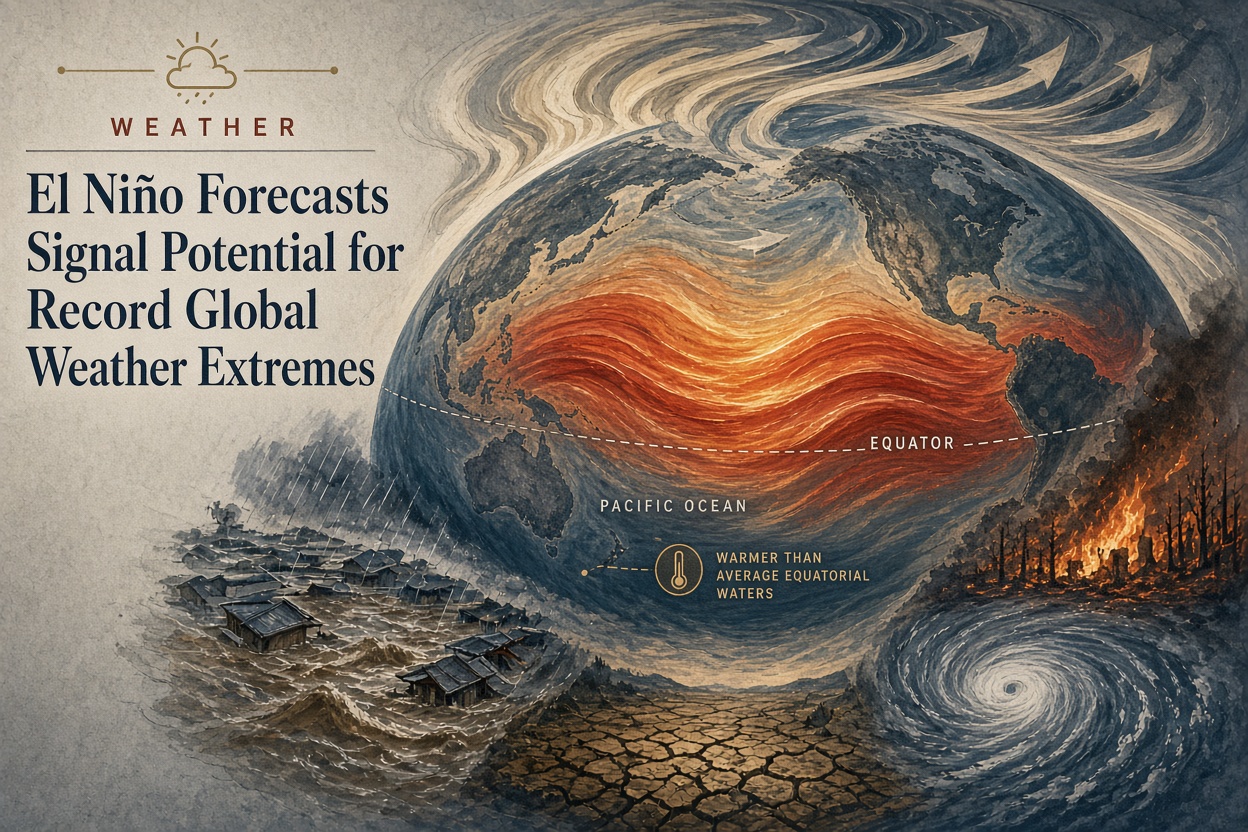
A strong El Niño event, initiated by wind bursts in the western Pacific last December, has already produced unusual conditions including summerlike weather in Peru during winter and storms in Chile [1].
Oceanic Kelvin waves have transported warm water eastward across the Pacific, contributing to sea surface temperatures that may exceed those of major historical events such as 1997-98 and 2015-16 [1].
Three-month forecasts released in early August indicate regions where temperatures, precipitation, or humidity are more likely to reach the 95th or 5th percentiles compared with historical data [1].
The event is projected to push global temperatures to new highs while altering patterns of drought, floods, heat, and humidity, with effects that could prove stronger and longer-lasting than typical [1].
These projections rely on a single source and carry noted uncertainty; readers should treat them as developing rather than confirmed [1].