Google DeepMind on November 10, 2026 introduced Gemini Robotics 2.5, the latest version of the vision-language-action model that turns camera input and plain-language instructions into motor commands for robots. DeepMind calls it its most capable robotics model to date and says it broadens the range of skills a robot can pick up while shortening the time it takes to learn them. The model is not publicly available; DeepMind says it is rolling out to robotics partners, and Ars Technica reports that group includes Agile Robots, Apptronik, and Boston Dynamics. No API access or pricing has been announced.
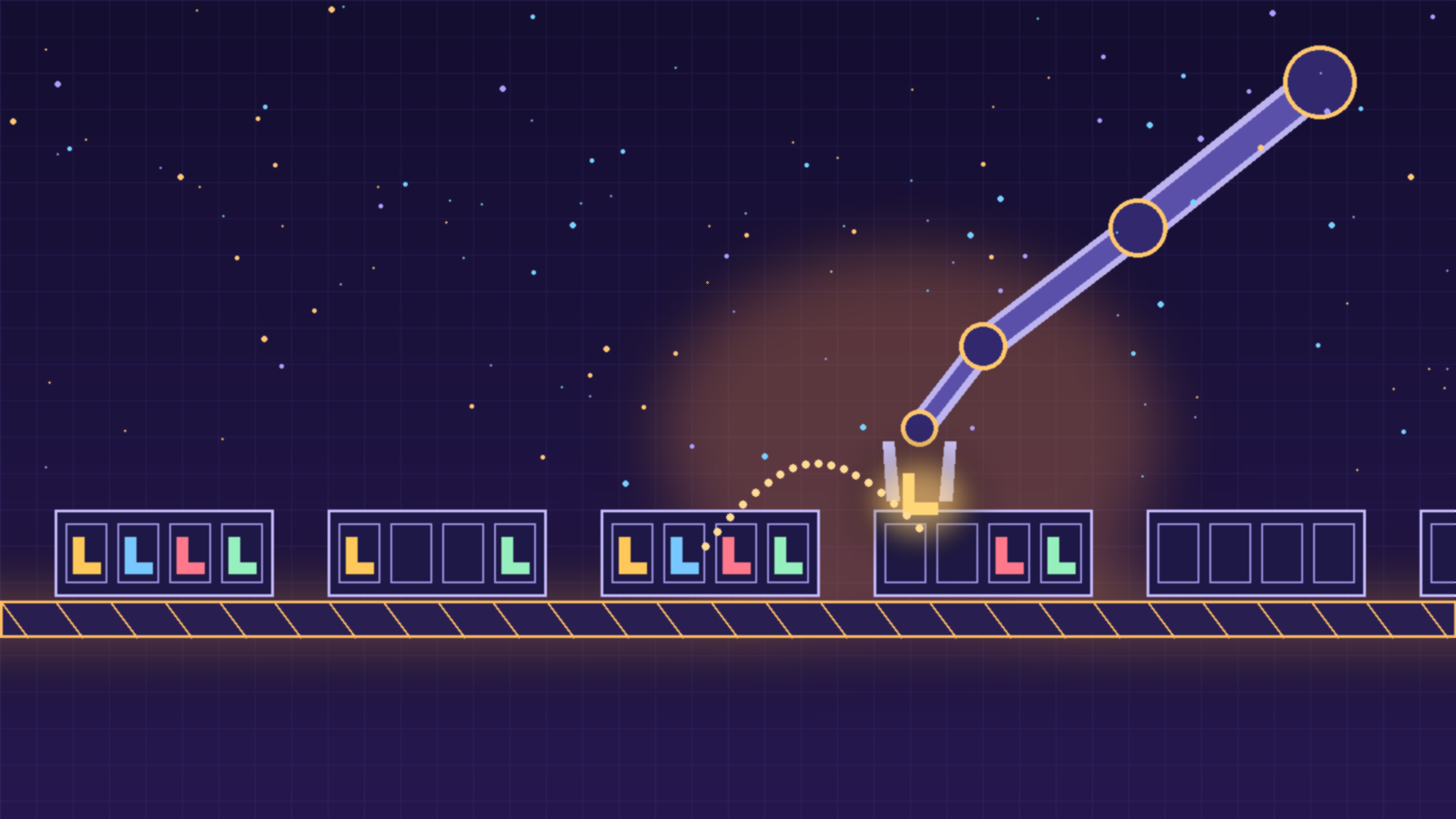
The headline result comes from outside the lab. Working with Apptronik and Mercedes-Benz, DeepMind ran Apptronik's Apollo 2 humanoid on active production lines at Mercedes-Benz plants in Kecskemét, Hungary, and Sindelfingen, Germany. The job was automotive kitting: pulling metal brackets out of bulk bins and placing them into sequencing trays in the exact order each vehicle on the line needs. A Gemini Robotics embodied-reasoning model tracked the overall workflow while Gemini Robotics 2.5 drove the robot's arms and five-fingered hands, correcting for missed placements along the way. DeepMind reports a 96 percent success rate. Apptronik CEO Jeff Cardenas said in DeepMind's announcement that the models improved dramatically after a few weeks of post-training and carried over to Mercedes-Benz production with very little drop-off.
That figure deserves context. It comes from a proof of concept, not a commercial deployment, and DeepMind has not said how many picks it covers, how long the pilot ran, or how the robot's pace compared with a human worker's. Ars Technica quotes DeepMind director Kanishka Rao describing the remaining four percent as a steep road, and notes that Gemini Robotics 2.5 still runs on cloud servers rather than on the robot itself, which adds latency, and that the factory demonstration video was sped up two times. DeepMind robotics head Carolina Parada framed the trade-off as choosing between near-perfect performance on one narrow application and pushing general-purpose capability across many.
In the lab, DeepMind says it evaluated the model on more than 200 distinct tasks, including serving food with tongs, pipetting liquid, and tying a bow on a gift box, which is notable because soft, deformable materials like ribbon are notoriously hard for robots to handle. Compared with its previous baselines, DeepMind reports a 30 to 100 percent higher success rate depending on task type and 20 to 30 percent faster completion. The company credits its Gemini 4 Argon model with speeding development by generating thousands of simulated practice runs from real camera scenes and by helping researchers diagnose failures from video. All of these performance figures are self-reported.
On safety, DeepMind says inference-time reasoning guidance lets the robot steer around hazards, raising safe task completion by 33 percent around obstacles and 43 percent around nearby people. It is also releasing ASIMOV-Jailbreak, an open benchmark of prompts that disguise unsafe requests, intended to test how easily a robot can be talked into doing something dangerous. Sources differ on the details: DeepMind's blog describes the benchmark as containing hundreds of prompts and says Gemini 4 Argon reaches 99.5 percent jailbreak resistance versus 82 percent for the earlier Gemini Robotics ER 2 baseline, while Ars Technica reports 1,500 prompts and scores of 98.8 percent and 73.5 percent. DigiEditorial has relied on DeepMind's published figures and flags the discrepancy. The Verge and The Decoder independently confirmed the launch, the 200-task evaluation, and the Mercedes-Benz pilot.