OpenAI wants its models to do more than write software. In a post published on November 3, 2026, titled "Accelerating engineering for the physical world," the company described how its models are being used to design, simulate and build physical products, spanning mechanical and electrical engineering and end-to-end system design, and invited engineering firms and software vendors to work with it.
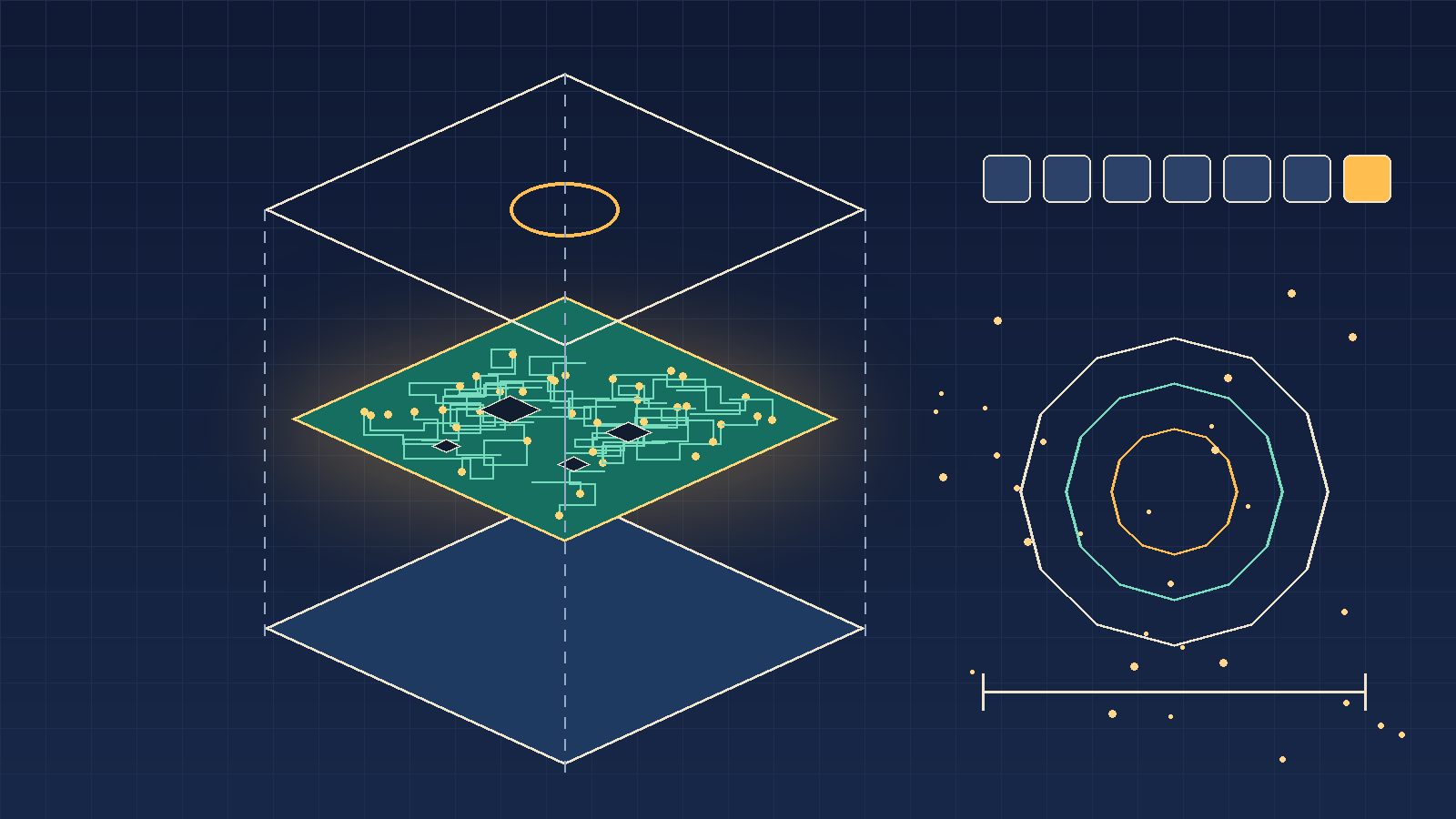
The centerpiece is a test device. OpenAI says it set out to see whether it could create a device without any direct human edits, using GPT-6 to define the functional requirements and GPT-6 Astra to do the design work for a small gadget people can use to talk to Codex, its coding agent. According to the company, Astra developed the device's look, designed the enclosure and the internal structures that hold the parts in place, selected the electrical components and laid out the printed circuit board to fit inside the enclosure, and generated the user interface, firmware and software integrations that connect it to Codex.
OpenAI says two team members designed the device with Astra in under a week while working on it as a side project, and that a contract manufacturer then built a small batch of prototypes in under a month. The company is candid about the limits: getting the device ready for manufacturing still required several rounds of review and iteration, because Astra did not consistently account for the manufacturer's production limits, tolerances or assembly details. OpenAI says those gaps are helping it identify what future models need to do better. The Decoder, which reported the announcement, summarizes it the same way: every design step was handled by the model, but manufacturing readiness needed human-led revision rounds.
The post also describes internal adoption. OpenAI says its hardware and infrastructure teams, whose work spans robotics and compute infrastructure, use Codex and ChatGPT to create and revise CAD models, prepare manufacturing drawings, set up simulations and review designs, and that model usage across those teams, measured in tokens, has grown 23-fold since February.
On measurement, OpenAI points to BenchCAD 2.0, which tests whether models can reconstruct 3D parts and assemblies and identify connections on circuit boards. The company says a newer internal model averaged 0.875, compared with 0.594 for GPT-6 Astra at its highest reasoning setting. As The Decoder notes, OpenAI has not shared any details about that internal model, and the scores are OpenAI's own.
OpenAI also named outside collaborators. It is expanding work with Chip Ganassi Racing, whose R&D engineers are testing workflows that turn 3D scans of existing parts into editable CAD models and 2D manufacturing drawings, with CGR engineers checking the output for accuracy and manufacturability. And it announced a new research collaboration with Mazda, in which OpenAI researchers and forward-deployed engineers work with Mazda's aerodynamics and crash-safety engineers on airflow and structural simulations for new vehicle designs. OpenAI says it will share results from the Mazda work in the coming months.
The announcement landed on the same day Google and Mercor released Physical-Engineering's Last Exam, a benchmark of 85 long-horizon mechanical, electrical, civil and structural engineering tasks. On its 56 hidden test tasks, every model scored below 50%; Claude Opus 5.5 in Claude Code led at 48.3%, with GPT-6 Astra in Codex second at 45.8%. Taken together, the two releases tell a consistent story: frontier models can now carry a surprising share of real engineering work, but producing a design that clears every manufacturing and safety constraint still depends on human engineers.